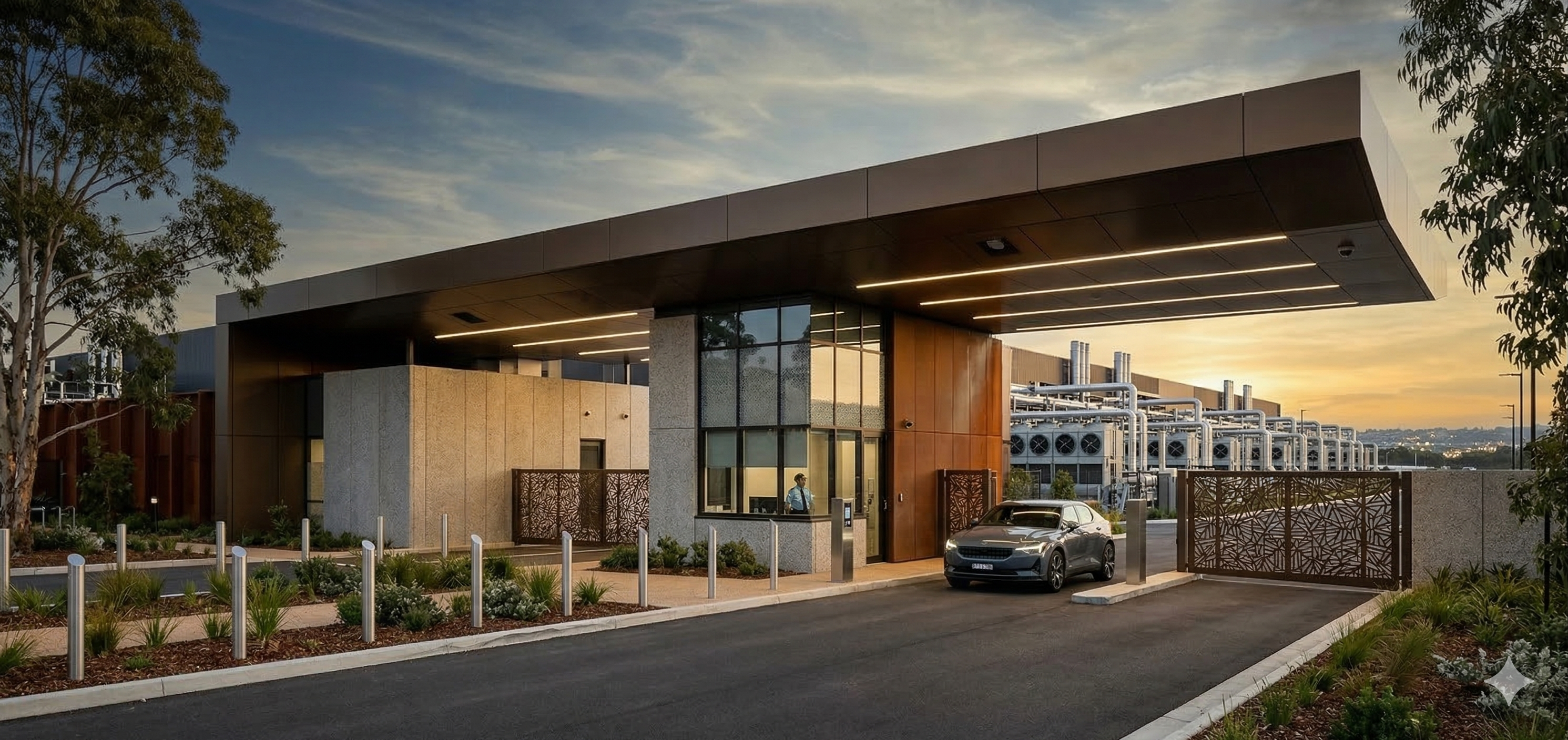
Project Atlas
A staged 1GW+ AI infrastructure campus designed around grid integration, renewable energy interface, water resilience, high-density compute and long-term technology adaptability.
Project Summary
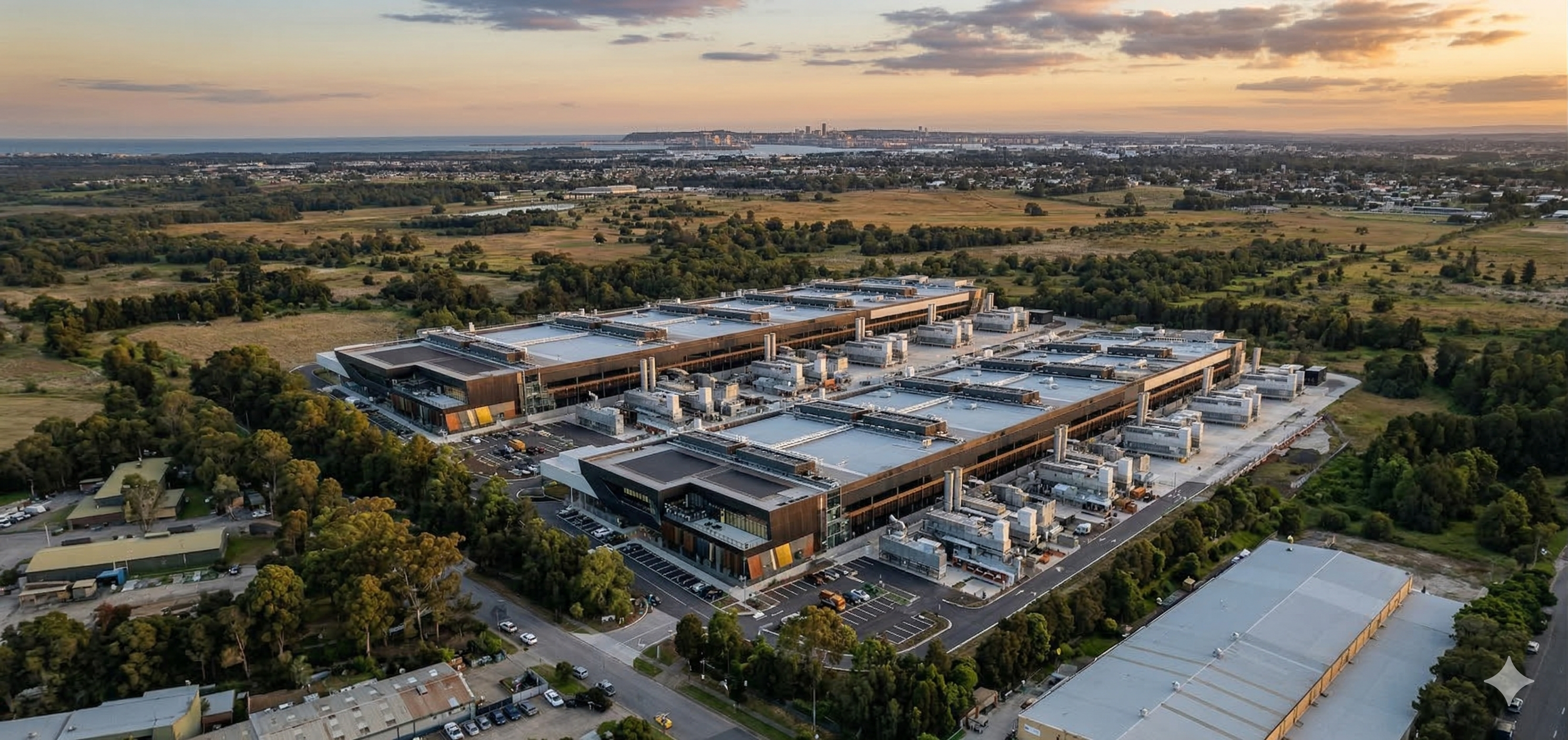
Project Atlas explores how a giga-scale AI/data centre campus could be planned in regional Australia where land availability, transmission access, renewable energy potential and long-term expansion capacity are the primary drivers.
The concept tests how a 1GW+ campus can move beyond a conventional data centre estate and become a coordinated infrastructure precinct integrating substations, BESS, water-sensitive landscape, staged data hall modules, future high-density AI expansion, and public-facing environmental mitigation.
Core Problem
AI compute demand is increasing faster than traditional data centre planning models can comfortably accommodate. Large-scale sites need to solve more than building layout. They must answer:
- Can the site physically accommodate 1GW+ of staged infrastructure?
- Can power be delivered and staged sensibly?
- Can the planning pathway tolerate the scale?
- Can visual, acoustic, water and environmental impacts be credibly mitigated?
- Can the campus adapt to future compute densities and cooling technologies?
- Can the concept be communicated clearly to boards, planners, utilities and investors?
Site Assumptions
Fictional regional Australian site.
- Site area: 250–450 hectares
- Target IT load: 1GW+
- Development format: staged AI/data centre campus
- Context: rural-industrial transition zone
- Key infrastructure: nearby transmission corridor, highway access, assumed fibre corridor
- Sensitive interfaces: rural dwellings, ecological corridors, agricultural land, visual exposure from arterial road
Key Constraints
Planning Constraints
- -Large-scale visual impact
- -Noise from mechanical/electrical plant
- -Traffic and construction staging
- -Bushfire or grassfire risk
- -Biodiversity and riparian setbacks
- -Community concern around water and energy use
- -Uncertainty around planning pathway and state-significant assessment triggers
Infrastructure Constraints
- -High-voltage connection staging
- -Substation and transmission easements
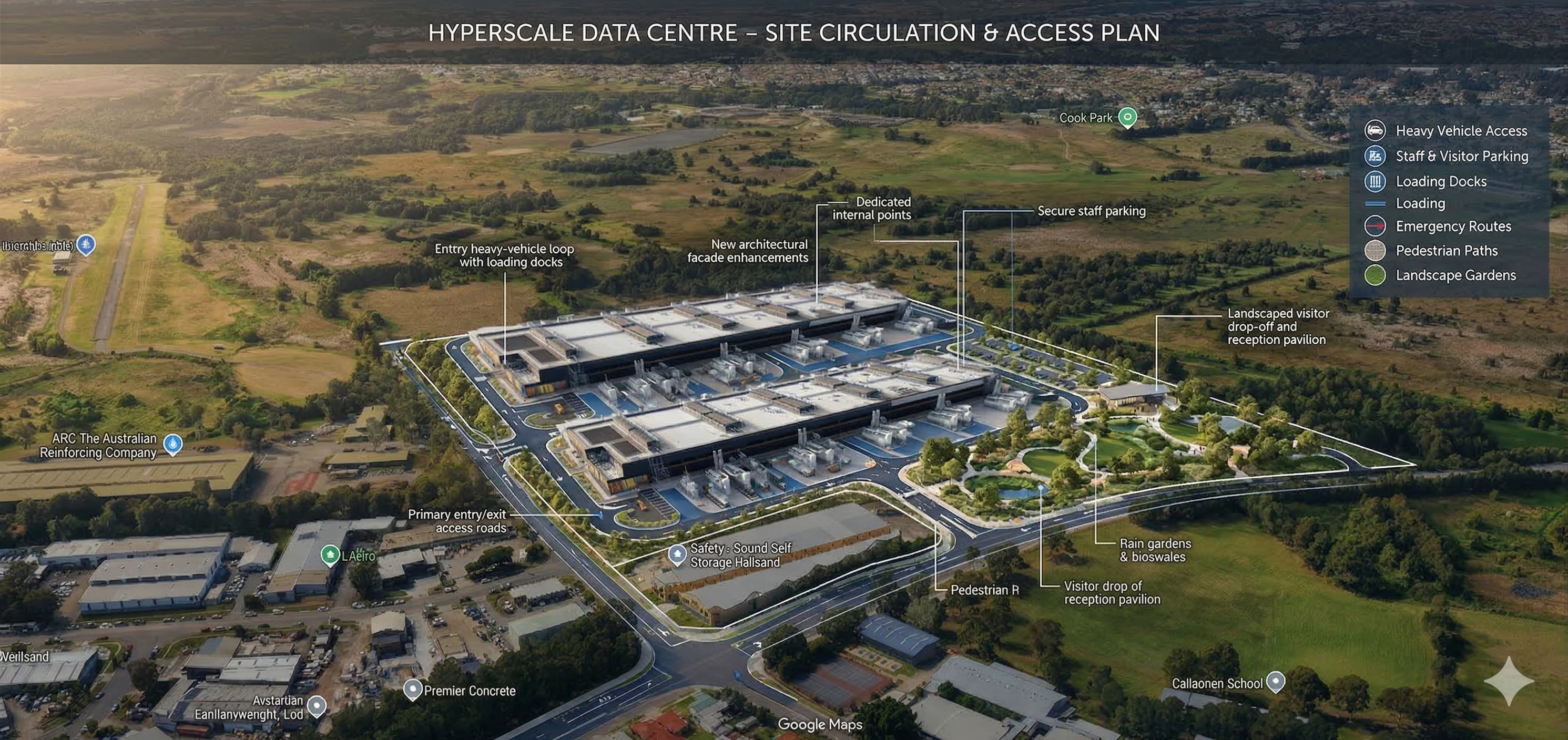
- -Equipment laydown and heavy vehicle access
- -Fibre route redundancy
- -Backup generation or alternative resilience strategy
- -Long-term plant replacement zones
Environmental Constraints
- -Heat island impact
- -Water demand perception
- -Stormwater and overland flow
- -Landscape rehabilitation
- -Embodied carbon from major infrastructure
- -Noise impact to rural receivers
Concept Solution
The campus is structured as a series of expandable compute precincts arranged around a central infrastructure spine.
Development KPIs
Capacity KPIs
- »Target campus scale: 1GW+
- »Indicative first stage: 150MW–250MW
- »Expansion increments: 100MW–250MW
- »Long-term campus growth: multi-stage over 10+ years
- »Data hall planning: modular high-density AI-ready blocks
Commercial KPIs
- »Rapid land viability assessment
- »Clear acquisition-support narrative
- »Stageable capital deployment
- »Board/investor communication package
- »Early utility engagement framework
- »Planning risk identification before major due diligence spend
Delivery KPIs
- »Early concept pack: 5–10 business days
- »Board-ready strategy pack: 2–4 weeks
- »Multi-option site comparison: 3–6 weeks
Planning Narrative
Project Atlas is framed as critical digital infrastructure supporting AI, cloud computing, economic development and regional investment. The planning narrative acknowledges that the project’s scale creates significant environmental and community obligations. The concept therefore prioritises:
- early agency engagement
- transparent infrastructure staging
- visual and acoustic mitigation
- ecological protection zones
- water-sensitive design
- construction traffic planning
- community benefit communication
Sustainability Narrative
Project Atlas is not presented as "green because it has solar panels." The sustainability strategy is infrastructure-deep.
- Renewable energy procurement pathway
- BESS integration for grid support
- Low-water cooling strategy where technically viable
- Heat rejection impact management
- Biodiversity corridors and landscape buffers
- Reuse of topsoil and regional planting
- Modular construction to reduce rework
- Future adaptation to higher-density liquid-cooled compute
- Embodied carbon tracking in later design phases
Public Interface Narrative
The public interface focuses on trust, scale management and local value.
- The campus is visually screened from sensitive viewpoints.
- Noise-generating infrastructure is internalised and buffered.
- Landscape zones provide ecological and visual benefit.
- The project supports regional digital infrastructure investment.
- Water and energy impacts require transparent assessment.
- Staging avoids uncontrolled expansion and supports long-term planning certainty.